
OSM Industry Intel • Summer 2026
The Brain’s Immune Cells Get Stuck in Attack Mode. The Fix Is Not More Antioxidant. It Is the Right Amount.
A new Frontiers in Nutrition review reframes neuroprotection around microglial immune state and a dose-response curve that is shaped like an upside-down U. The implication for formulators is uncomfortable and genuinely useful: past a certain point, more of your hero ingredient makes the product worse.
Nearly every cognitive product on the shelf sells the same basic promise: elevate a neurotransmitter, feel sharper today. Push acetylcholine, nudge dopamine, boost blood flow. It is a fine business, and some of those ingredients do exactly what the label says for a few hours.
But if you are building a brain-health line meant to matter over years rather than an afternoon, a new review suggests the more important target is not a neurotransmitter at all. It is an immune cell.
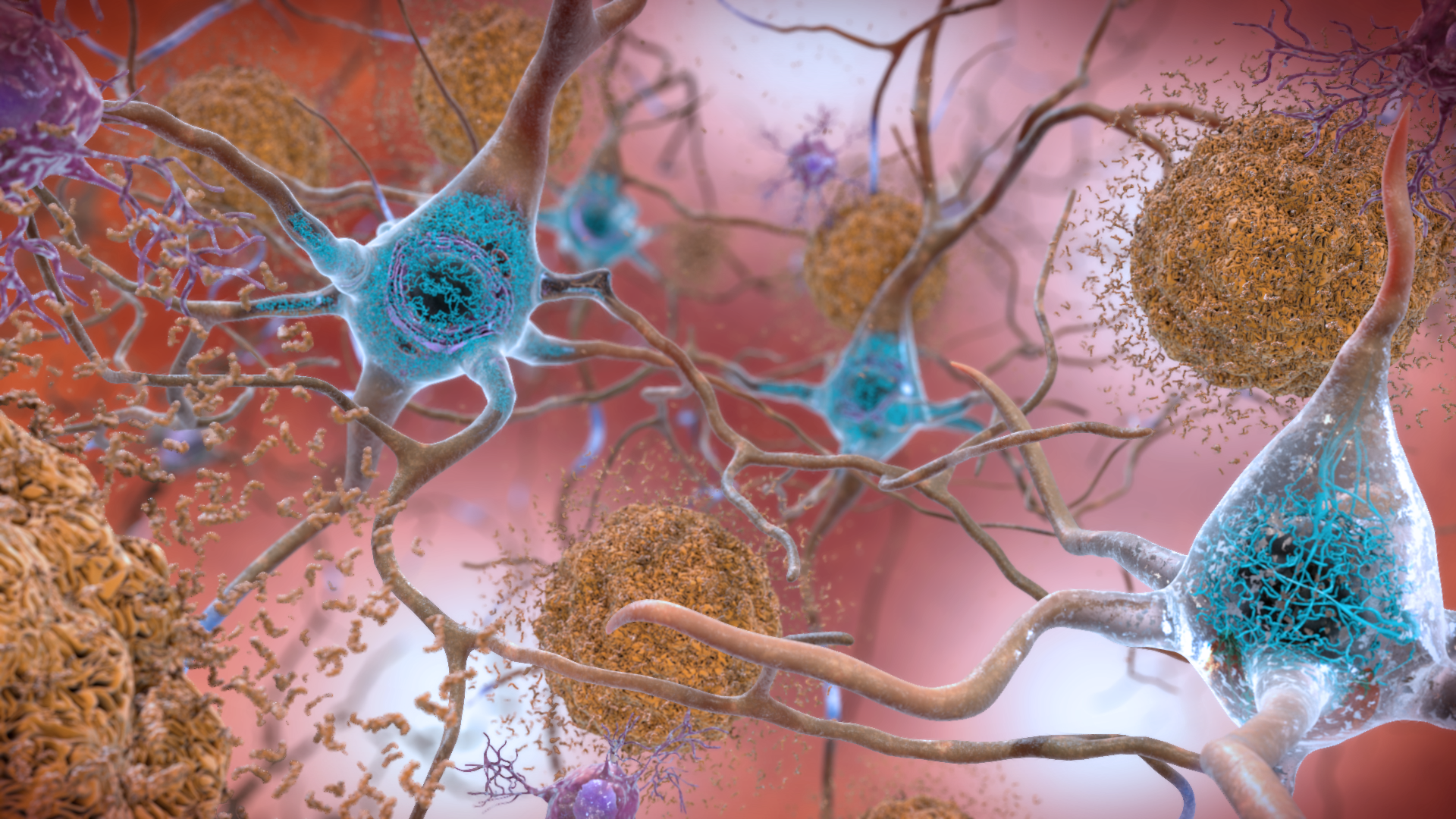
Microglia are the brain’s resident immune cells. In a healthy brain they are useful neighbors: they patrol tissue, clear metabolic waste, prune unused synapses, and generally keep the neighborhood clean. Under chronic oxidative and inflammatory stress, they shift into a persistently reactive, pro-inflammatory state and stay there. A cell that was supposed to be doing cleanup starts pumping out cytokines instead, and the cleanup stops happening. The review describes this as microglia becoming “maladaptive,” which is a polite way of saying the brain’s janitorial staff has been reassigned to a riot.
That reframe alone is a better product story than “boosts acetylcholine.” But the genuinely surprising part of this paper is what it says about how to influence that immune state, and it runs directly against how our industry prices and markets ingredients.
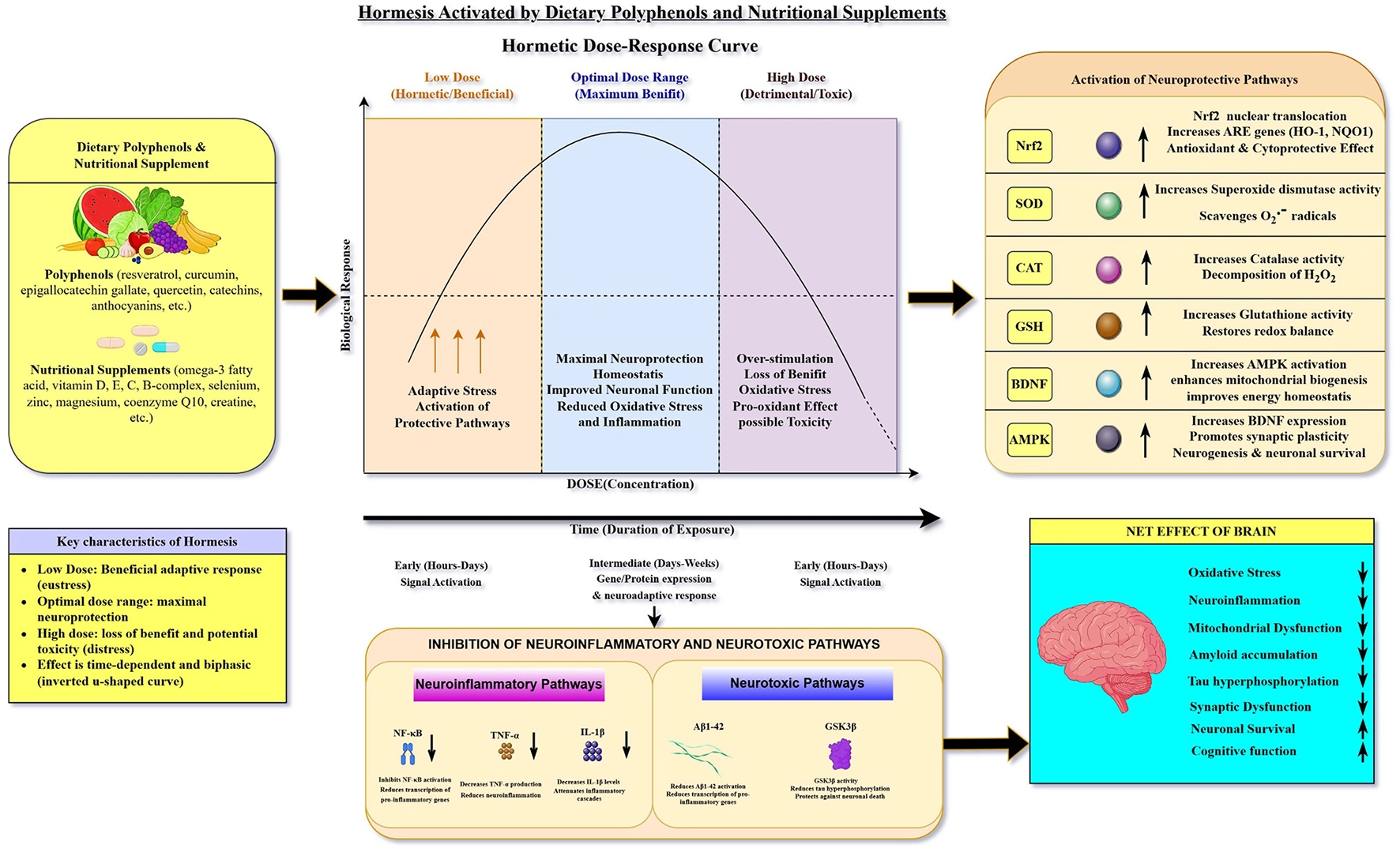
The answer is not maximum dose. The review’s own graphical abstract is an inverted U-shaped curve, and the message is blunt: low-to-moderate doses of these bioactives activate protective pathways, an optimal range delivers peak neuroprotection, and high doses tip into disruption and toxicity. More is not better. More is, past a point, actively worse.
Here is the mechanism, the dose curve nobody wants to put on a label, and what it actually means for building a defensible brain-health line.
What the Review Actually Says
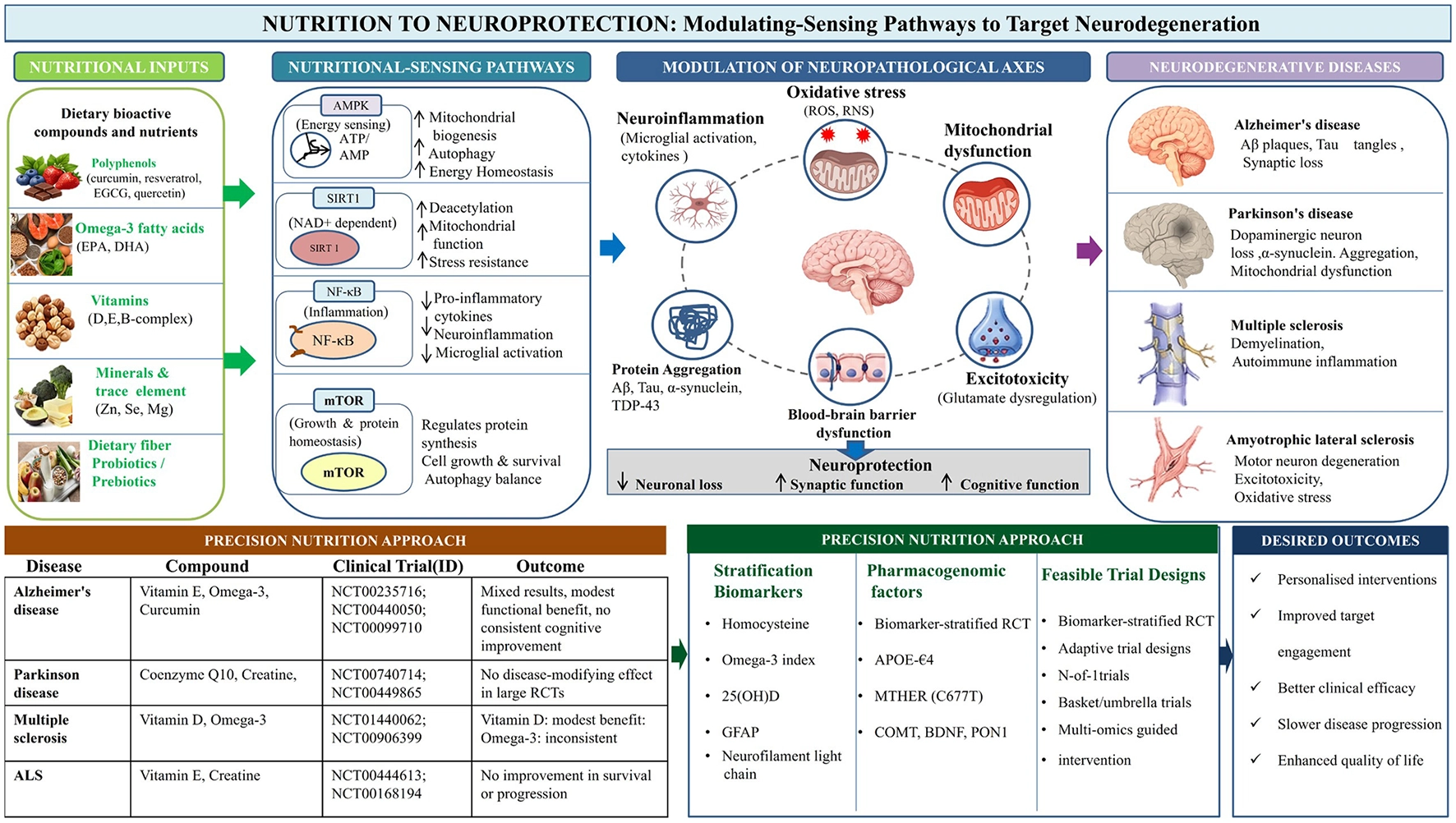
The paper’s central argument is that neurodegeneration is not simply neurons dying. It is a systems-level failure across four interlocking domains: redox imbalance, chronic neuroinflammation, mitochondrial dysfunction, and impaired protein clearance, all converging on synaptic loss. And critically, the authors argue every one of those domains is nutrient-sensitive.
Microglia Change Their Metabolism, and Their Metabolism Changes Their Behavior
The immune-cell piece is where this gets mechanistically interesting. The review describes microglia and astrocytes as cells that normally handle metabolic support, synaptic cleaning, and immune surveillance, but which “gradually change to maladaptive phenotypes with long-term oxidative stress,” releasing excess pro-inflammatory cytokines and reactive species that injure the neurons they were meant to protect.
What drives that switch is partly metabolic. The paper describes microglia undergoing immunometabolic changes, shifting between oxidative and glycolytic states, and those states directly determine inflammatory phenotype. Nutrient imbalance pushes microglia toward a glycolysis-dependent, pro-inflammatory profile characterized by two problems at once: overproduction of cytokines and, just as importantly, defective phagocytic clearance of protein aggregates. The cell gets louder and less useful simultaneously. Balanced nutrient signaling, by contrast, supports anti-inflammatory and neurotrophic function.
That is the cleanest version of the story for a consumer: the brain’s cleanup crew runs on fuel, and what you feed them determines whether they clean or whether they riot.
The Nrf2 Pathway and Why Hormesis Changes Everything
Here is the part that should reorganize how you think about antioxidant formulation.
The review is emphatic that polyphenols and related bioactives do not primarily work by scavenging free radicals directly. They work by acting as mild stressors that trigger the cell’s own adaptive defenses, principally through Nrf2, a transcription factor that switches on a whole battery of endogenous antioxidant and detoxification genes: superoxide dismutase, catalase, glutathione systems, and mitochondrial maintenance machinery.
That distinction matters enormously. If a compound works by directly mopping up radicals, then more compound equals more mopping, and dose-response is roughly linear. But if a compound works by signaling the cell to build its own defenses, the relationship is not linear at all. It is hormetic. A small, well-calibrated stress produces a robust adaptive response. Too much stress overwhelms the system it was supposed to strengthen.
The review states this plainly: biological effects follow a hormetic dose-response, where low-to-moderate doses induce adaptive stress responses that enhance antioxidant capacity and neuronal resilience, while excessive doses may impair redox balance and promote toxicity. Sustained moderate exposure optimally activates Nrf2-driven cytoprotective mechanisms. Supraphysiological dosing may disrupt endogenous antioxidant systems.
Read that last sentence again if you sell a mega-dose antioxidant product.
THE FORMULATOR’S TAKE
The supplement industry has a structural bias toward higher label doses, because higher numbers look like better value on a shelf and cost almost nothing to add. Hormesis says that bias is scientifically backwards for this entire ingredient class. If your product’s mechanism is adaptive signaling rather than direct scavenging, then the optimal dose sits in a window, and going past it does not just waste money, it can move the consumer down the far side of the curve. That is a genuinely differentiating position for a brand willing to say it out loud: we dosed this to the research, not to the label. Almost nobody in the cognitive aisle is making that argument, and it is defensible, honest, and hard for a competitor to attack.
The Honest Clinical Record
To the authors’ credit, this review does not oversell. It lays out the clinical trial record for nutritional interventions in neurodegenerative disease, and the record is humbling.
Vitamin E showed modest slowing of functional decline in Alzheimer’s but no significant cognitive improvement. Omega-3 fatty acids failed to show benefit in established disease, which the authors attribute largely to late-stage intervention. Curcumin trials were limited by poor bioavailability and produced no detectable efficacy. In Parkinson’s, coenzyme Q10 did not slow progression in the QE3 trial and creatine showed no significant benefit. In ALS, both creatine and vitamin E failed. Vitamin D in multiple sclerosis is one of the more encouraging entries, with modest reductions in relapse rates, and even there results vary with baseline status.
The authors name the reasons directly: heterogeneity in study design, poor bioavailability, limited blood-brain barrier penetration, unclear dosing strategies, and intervention at a disease stage too late for metabolic support to matter. That is a striking list, because four of those five are formulation and delivery problems rather than ingredient problems.
The Review’s Own Proposed Fix: Delivery
The paper dedicates an entire section to this, and it reads almost like a brief for a contract manufacturer. The authors identify poor bioavailability, rapid metabolism, and limited blood-brain barrier crossing as the major reasons polyphenols fail to translate from petri dish to patient. Their proposed solution is nanoformulation: nanoliposomes and phytosomes, solid lipid nanoparticles, and nanostructured lipid carriers, which improve solubility, stability, and targeted delivery.
Encapsulation protects these compounds from premature degradation, improves absorption, and allows more unmetabolized active compound to actually reach brain tissue. Preclinical work cited in the review shows these systems increase brain uptake and outperform free compounds on mitochondrial and neuroinflammatory markers.
So the review’s two central practical claims are that the dose needs to be right rather than maximal, and that the delivery system determines whether the dose that reaches the target has anything to do with the dose on the label. Those are both manufacturing problems.
The Caveats Worth Knowing
This is a narrative review, and the authors say so themselves, acknowledging selection bias from the absence of systematic literature methodology. Much of the underlying evidence is in vitro and animal work that may not translate cleanly to humans. The authors specifically flag that hormetic dose-response relationships “remain insufficiently validated in large-scale clinical trials,” which is an important limitation on the very mechanism that makes this story interesting. Standardized dosing strategies do not exist for most of these compounds, and formulation heterogeneity limits reproducibility.
None of that makes the framework wrong. It means the honest framing is that this is a mechanistically coherent model with real preclinical support and a clinical record that is still mostly unfulfilled. Which is, notably, exactly what the authors say.
What Brands Should Actually Do With This
The cognitive category is crowded with products competing on two axes: how many milligrams are in it, and how quickly the consumer feels something. This review points toward a third axis that almost nobody is competing on, which is whether the formulation is calibrated to the biology at all. Here is how to build there.
Play 1: Make Dose Calibration the Brand Position
The hormesis finding is a marketing asset disguised as a constraint. Every competitor in the polyphenol and antioxidant space is racing to print bigger numbers. A brand that instead says “we dosed to the optimal window because the research shows more is not better” has a story that is scientifically defensible, differentiating, and appealing to exactly the sophisticated consumer who buys premium cognitive products. It also happens to lower your cost of goods, which is a rare case of the honest answer and the profitable answer pointing the same direction. Just make sure you can actually cite the dosing rationale for each active when someone asks.
Play 2: Enhanced Delivery for the Compounds That Need It
The review names bioavailability and blood-brain barrier penetration as primary translation failures and names liposomal and lipid-based delivery systems as the fix. Curcumin is the textbook case, cited in this very paper as having failed clinical trials specifically because of poor bioavailability. Resveratrol has the same problem, flagged in the review for low bioavailability and rapid metabolism. If your formula leans on either, delivery is not an upsell, it is the difference between a working product and an expensive one. We covered the mechanics in our guide to how liposomal supplements work and where they fit in your product line. This is the same lesson the NIH’s longevity screen delivered from a completely different direction, which we broke down in our piece on the 2026 ITP results.
Play 3: Multi-Pathway Formulas Over Single-Hero SKUs
One of the review’s recurring criticisms is that single-nutrient supplementation “may be incapable of interacting with the network of pathways” that produce benefit in preclinical models. The four failure domains it describes (redox, inflammation, mitochondrial function, proteostasis) are interlocking, and the authors repeatedly argue that whole-diet and multi-pathway approaches outperform reductionist single-compound interventions. That is an argument for thoughtfully constructed stacks rather than mega-dosed monoproducts: a moderate polyphenol dose for Nrf2 signaling, omega-3s for membrane and inflammatory resolution, B vitamins for methylation and mitochondrial cofactors, and vitamin D for neuroimmune modulation. The mitochondrial and metabolic side of this connects directly to the fuel story we covered in our piece on apigenin and cellular NAD+.
Play 4: Target Proactive Consumers, Not Late-Stage Ones
Read the clinical failures carefully and a pattern emerges that the authors state outright: interventions started too late, in populations where neuronal loss and circuit disruption were already advanced, were unlikely to show benefit regardless of the compound. That is a scientific finding with an obvious commercial translation. The realistic consumer for a brain-health product is the proactive 40-to-60-year-old maintaining resilience, not someone managing established disease. That is also the only demographic you can legally market to. The healthy-aging framing runs through the whole longevity catalog, including the muscle preservation angle in our piece on muscle as an endocrine organ and the brain-aging research in our microdose lithium orotate breakdown.
Play 5: Format Follows the Dose Window
Here is where hormesis becomes a practical manufacturing spec rather than a philosophy. If the optimal dose of your polyphenol actives sits in a moderate window, then dose accuracy and batch-to-batch consistency matter more than they would if you were simply loading in as much as possible. A wide variance around a mega-dose is forgiving. A wide variance around a calibrated window is not. That has real implications for format selection and process control, and it is one of the underappreciated technical challenges in formats where uniformity is genuinely hard, which we got into in our breakdown of the four key imperatives for gummy manufacturers in 2026. If dose precision is part of your brand promise, your manufacturer needs to be able to hold the tolerance and document it.
Claims and Compliance Reality Check
This topic sits close to a bright regulatory line and it is worth being direct about where it is. The source review is about Alzheimer’s, Parkinson’s, MS, and ALS. Those are diseases. Any marketing that positions a supplement as preventing, treating, or slowing neurodegenerative disease is a drug claim, regardless of how carefully the research is phrased.
The defensible lane is still substantial. You can say a product supports cognitive function, supports healthy brain aging, provides antioxidant support, supports a healthy inflammatory response, and supports cellular energy metabolism, all as structure-function claims at appropriate doses. What you cannot do is claim your product shifts microglial polarization, activates Nrf2, or clears protein aggregates, because those are mechanistic claims describing preclinical findings and they read as disease-adjacent to a regulator. The mechanism is outstanding education content and it will do more marketing work in a well-written blog post than it ever could on a panel. AI-driven monitoring keeps making unsupported claims easier to find, which we covered in our analysis of how AI is changing supplement discovery.
The Bottom Line
The interesting reframe in this review is that brain health is less about acutely nudging a neurotransmitter and more about whether the brain’s immune cells are doing their job or making things worse. The genuinely useful finding is the shape of the dose-response curve underneath it. These compounds work by signaling the cell to build its own defenses, which means there is an optimal window and a far side to fall off. Combine that with the review’s own diagnosis that bioavailability and delivery are why most of these ingredients have failed in clinical trials, and the strategic conclusion writes itself: the winning brands in this category will be the ones that get the dose right and get it absorbed, not the ones that print the biggest number on the panel. That is a manufacturing problem before it is a marketing one.
Ready to Build?
Build a brain-health line dosed to the research, with a USDA Organic and GMP-certified manufacturer.
Organic Supplement Manufacturing handles formulation, sourcing, manufacturing, and fulfillment for liposomal systems, capsules, powders, stick packs, and gummies. Low MOQs, full-service support, and a team that reads the primary literature before the label gets printed.
Start a Conversation →Source: Singh G, Singh G, Shreya, Kumari A, Aran KR. Nutrients and bioactive compounds as modifiers of neurodegenerative trajectories: molecular mechanisms, translational barriers, and precision nutrition. Frontiers in Nutrition. 2026; 13:1819432. doi:10.3389/fnut.2026.1819432. Read the review.
Disclaimer: This article is intended for supplement brand and contract manufacturing audiences for informational and educational purposes only. It is not intended as medical advice. The source is a narrative review whose authors acknowledge selection bias, reliance on preclinical evidence, and that hormetic dose-response relationships remain insufficiently validated in large-scale clinical trials. Statements regarding dietary supplements have not been evaluated by the FDA and are not intended to diagnose, treat, cure, or prevent any disease.