
OSM Industry Intel • Spring 2026
Vitamin D Might Be a Circadian Clock Ingredient, Not Just a Bone Health One
A new review in the International Journal of Molecular Sciences lays out the case that vitamin D helps regulate the body’s biological clock, with implications for sleep, mood, and metabolic health. Here is what it means for supplement brands.
Vitamin D has one of the most worn-out marketing stories in the entire supplement category. Bone health, immune support, maybe a nod to mood in the winter months, and that is usually where the conversation stops. Most brands treat it like a commodity ingredient, which is exactly why it sells in enormous volume and generates almost no excitement.
A new review is making the case that we have been underselling it this whole time.
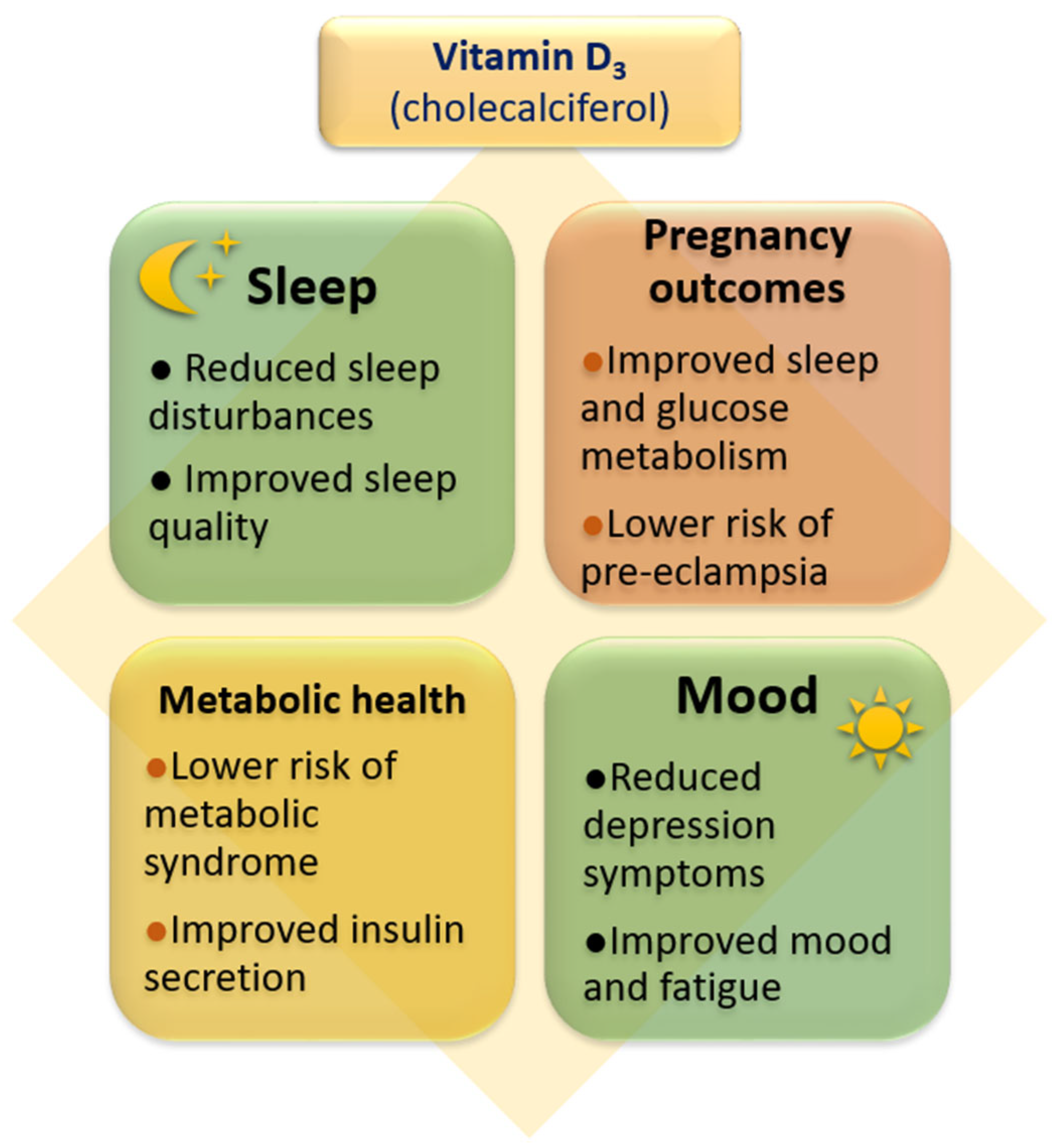
A paper published in the International Journal of Molecular Sciences pulls together a growing body of evidence that vitamin D plays a role in regulating the circadian clock, the internal 24-hour timekeeping system that governs sleep, metabolism, and mood. The review introduces a framework called “circadian syndrome,” which bundles together sleep disturbances, depression, and the familiar cluster of metabolic syndrome risk factors, and it positions vitamin D as a compound that may touch all of them through a shared mechanism.
This is a much more interesting story than “vitamin D is good for your bones.” It connects one of the highest-volume, most trusted ingredients in the entire category to two of the fastest-growing consumer demand areas right now: sleep and metabolic wellness. For brands looking at vitamin D as a tired commodity, this reframes it as a foundational ingredient with a fresh, science-backed narrative.
Here is what the review actually argues, the mechanism behind it, and where the circadian angle opens up product opportunity in 2026.
What the Review Actually Argues
First, a quick primer on the biology, because the whole argument rests on it. Nearly every cell in the body contains a molecular clock, and these are coordinated by a master clock in a region of the brain called the suprachiasmatic nucleus. That master clock takes its primary cue from light hitting the retina, then synchronizes the peripheral clocks in your liver, gut, fat tissue, and elsewhere. The machinery runs on a set of “clock genes” (with names like BMAL1, CLOCK, PER, and CRY) that switch each other on and off in roughly 24-hour feedback loops.
When that system gets thrown off (think artificial light at night, shift work, erratic eating and sleep schedules) the result is circadian misalignment, and it is increasingly linked to metabolic disease, poor sleep, and depression. The review frames this bundle as circadian syndrome, an extension of the metabolic syndrome concept that adds sleep and mood disruption to the usual lineup of high blood pressure, blood sugar problems, and bad cholesterol numbers.
Where Vitamin D Enters the Picture
Here is the part that should make formulators sit up. The review describes several mechanisms by which vitamin D appears to interact directly with the clock machinery rather than just sitting nearby. The vitamin D receptor interacts with the CLOCK protein, modulating the activity of the central CLOCK-BMAL1 complex that drives the whole system. Certain vitamin D hydroxyderivatives (specifically 20-hydroxyvitamin D3 and 20,23-dihydroxyvitamin D3) act on the secondary regulatory loop involving the ROR and REV-ERB transcription factors.
A clinical study cited in the review even identified the clock gene PER1 as a direct target of vitamin D, and a network analysis flagged 87 vitamin D target genes that show circadian variation in living subjects. In other words, this is not a hand-wavy “vitamin D is generally good for you” claim. The proposed mechanism is specific, it operates at the level of gene transcription, and it is starting to show up in human data rather than just cell cultures.
THE FORMULATOR’S TAKE
The clinically interesting detail buried in this review is timing. Several of the studies suggest vitamin D’s effects on the clock and on metabolism are phase-dependent, meaning the time of day you take it may influence how it works. The review explicitly calls for more research into optimal dosing timing. For brands, that opens a door to chronobiology-informed product positioning (think “morning” formulas) that almost nobody in the vitamin D space is doing yet.
The Metabolic Connection
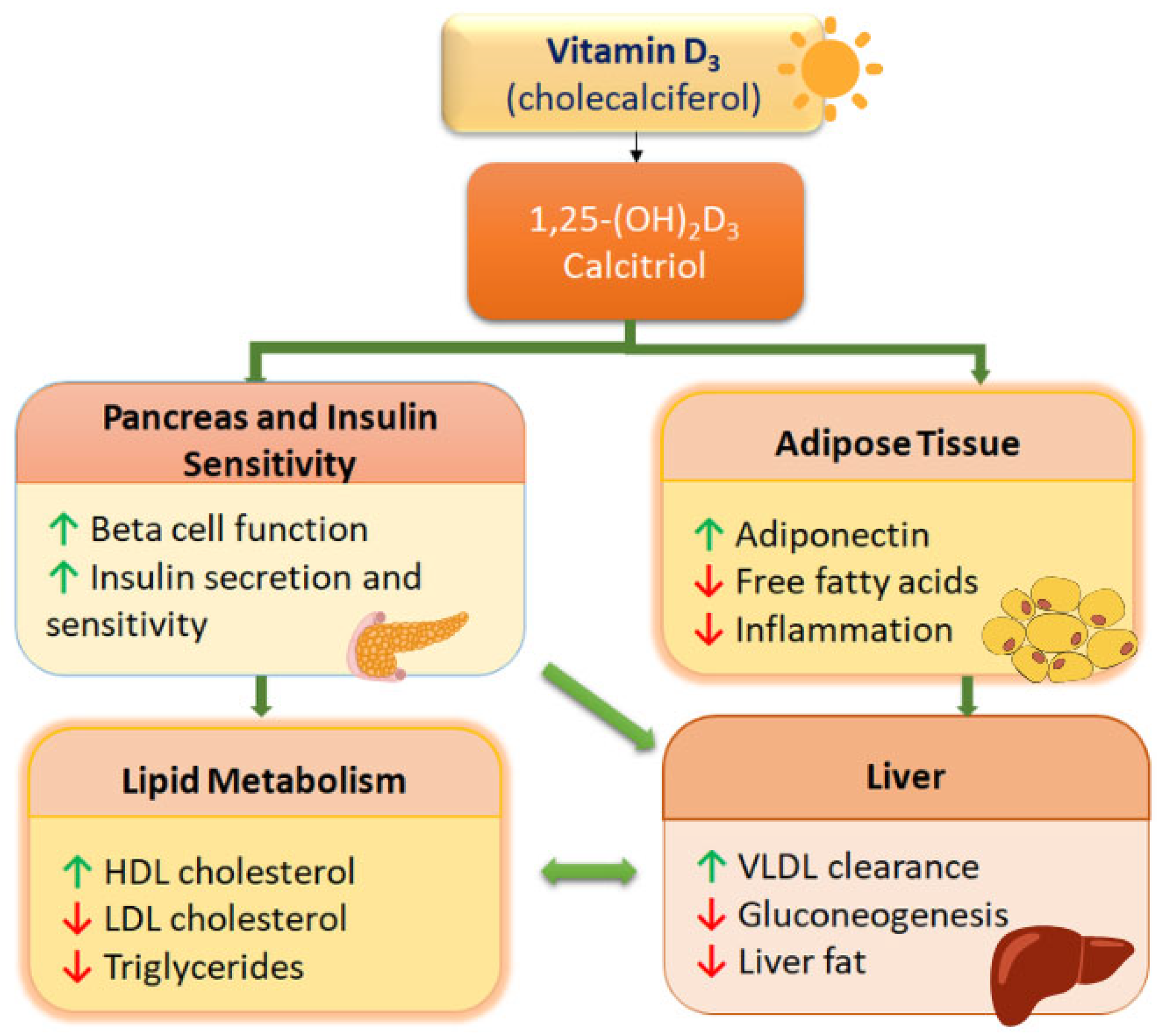
The review spends significant time on vitamin D’s metabolic effects, and this is well-trodden ground with strong support. Vitamin D enhances insulin secretion in pancreatic beta cells, improves insulin sensitivity in muscle and fat tissue, and dampens the chronic low-grade inflammation that drives insulin resistance in obesity. What is newer is the circadian framing: the review describes how vitamin D regulates a set of metabolic genes in a light/dark phase-dependent manner, suggesting it helps coordinate metabolism with the body’s daily rhythm rather than just nudging it in one direction.
There is also a vicious-cycle element worth understanding. Vitamin D is fat-soluble and gets sequestered in adipose tissue, so people carrying more body fat tend to show lower circulating vitamin D levels, which then feeds back into worse metabolic function. This is part of why vitamin D status and metabolic health are so tightly intertwined in the population data.
Sleep and Mood: Promising but Honest
The review is refreshingly candid about the gap between association and proof. Vitamin D deficiency is consistently associated with poor sleep quality, short sleep duration, and depression across a large number of cross-sectional studies and meta-analyses. The deficiency-to-poor-outcome link is fairly solid. The supplementation-fixes-it link is where things get messy.
Some interventional studies show high-dose vitamin D (above 4,000 IU per day) improving sleep efficiency and reducing the time it takes to fall asleep. Several meta-analyses show high-dose vitamin D alleviating depression symptoms, particularly in people under 50 and when supplementation runs at least 20 weeks. But other studies show no effect, and the results vary by age, sex, baseline status, and the dose used. One recent meta-analysis suggested vitamin D only helped with depression when baseline levels were in the insufficient range rather than the frankly deficient range, which is a counterintuitive and important nuance.
The mechanistic story for sleep and mood is plausible: vitamin D receptors are present throughout brain regions involved in sleep regulation, vitamin D supports serotonin synthesis (the precursor to melatonin), and it has anti-inflammatory effects in the brain. The review even notes that vitamin D’s benefits on sleep may be amplified when combined with magnesium and melatonin, which is a direct hint at formulation strategy.
The Caveats Worth Knowing
This is a narrative review, not a clinical trial, which means it synthesizes existing evidence rather than generating new proof. The circadian syndrome concept itself is recent and not yet universally adopted. Much of the direct clock-gene mechanistic work comes from cell and animal models, and the human supplementation data on sleep and depression is genuinely inconsistent. The single study connecting vitamin D status to circadian syndrome directly was cross-sectional, so it cannot establish cause and effect. None of this kills the story. It just means the responsible framing is “promising and mechanistically grounded,” not “proven.”
Where the Circadian Angle Fits in the 2026 Product Roadmap
Vitamin D is one of the highest-volume ingredients in the entire supplement industry, which is both its strength and its problem. The strength is universal consumer recognition and trust. The problem is that it has been commoditized to the point where competing on a plain vitamin D3 SKU is a race to the bottom on price. The circadian and metabolic framing is the most credible path to repositioning vitamin D as a premium, differentiated ingredient that brands can actually build a story around.
Here is where the opportunity is for brands working with a contract manufacturer.
Format 1: Vitamin D + Magnesium + Melatonin Sleep Stacks
The review hands you this formulation almost directly. It notes that vitamin D’s sleep benefits may be augmented by both magnesium and melatonin, which means a three-ingredient sleep stack has a mechanistic rationale rather than just a kitchen-sink ingredient list. This is the most obvious and most defensible play. A vitamin D, magnesium glycinate, and low-dose melatonin combination, formatted as a capsule or a nighttime gummy, lands squarely in the booming sleep support category with a foundational nutrient story that competitors leaning on melatonin alone cannot match.
Format 2: Chronobiology-Informed AM/PM Systems
The phase-dependent timing angle is genuinely underexploited. If vitamin D’s metabolic and clock effects depend partly on when it is taken, there is room for a two-part daily system: a morning formula built around vitamin D for metabolic and circadian support, paired with an evening formula for sleep. AM/PM systems carry higher perceived value, improve subscription retention because they build a daily ritual, and let a brand tell a sophisticated chronobiology story. This is the kind of premium positioning that separates a brand from the commodity D3 crowd.
Format 3: Metabolic Wellness and Healthy Aging Formulas
The metabolic syndrome connection supports vitamin D as an anchor ingredient in healthy aging and metabolic wellness products targeted at the 45+ demographic. Pair it with ingredients that share the insulin-sensitivity and energy-metabolism story, and you have a formula that speaks to one of the most motivated buyer segments in the market. B vitamins are a natural complement here given their role in energy metabolism, which we covered in our piece on why B3 and B6 just got more interesting for recovery supplements.
Format 4: High-Bioavailability Vitamin D Delivery
Because vitamin D is fat-soluble and absorption varies considerably between individuals, delivery format is a legitimate differentiator rather than just a marketing flourish. Liposomal and emulsified vitamin D systems improve and standardize absorption, which matters more when you are making a circadian or metabolic claim that depends on the nutrient actually reaching its targets. A high-bioavailability vitamin D positioned as the premium tier of the category has real legs. We broke down the delivery technology in our guide to how liposomal supplements work and where they fit in your product line.
Format 5: Vitamin D Gummies, Done Right
Vitamin D gummies are already a category staple, and the circadian story gives brands a reason to refresh tired SKUs with new positioning rather than competing purely on price and flavor. The opportunity is moving beyond the generic “daily D3” gummy into purpose-built sleep or metabolic gummies that carry the foundational-nutrient narrative. Gummy manufacturing is evolving fast on the formulation and stability side, which we covered in our breakdown of the four key imperatives for gummy manufacturers in 2026.
Claims and Compliance Reality Check
The circadian and metabolic science is exciting, which is exactly why it needs a careful hand on the label. Vitamin D already carries authorized structure-function claims around bone health, immune function, and muscle function, and those are your safest footing. Language like “supports healthy sleep,” “supports metabolic health,” and “supports the body’s natural circadian rhythm” sits in defensible structure-function territory if your dosing is appropriate. What you cannot do is imply that vitamin D treats depression, insomnia, diabetes, or metabolic syndrome as medical conditions, because the supplementation evidence is inconsistent and disease claims will draw regulatory attention quickly. AI-driven monitoring is also surfacing claim violations faster than ever, which we got into in our analysis of how AI is changing supplement discovery. Build the claim architecture conservatively and keep the mechanistic circadian story in your educational content rather than on the principal display panel.
The Bottom Line
Vitamin D has been hiding in plain sight as a commodity ingredient while the science quietly built a much more interesting case underneath it. The circadian clock connection ties one of the most trusted nutrients in the category to sleep and metabolic wellness, two of the strongest consumer demand drivers heading into 2026. The supplementation evidence is not airtight, and any brand building here needs to stay honest about that. But for formulators looking to take a tired SKU and give it a credible, science-forward second act, vitamin D just got a lot more interesting.
Ready to Build?
Reposition vitamin D with a USDA Organic and GMP-certified manufacturer that reads the research.
Organic Supplement Manufacturing handles formulation, sourcing, manufacturing, and fulfillment for capsules, gummies, tinctures, beverages, and AM/PM systems. Low MOQs, full-service support, and a team that builds the claim architecture before the label gets printed.
Start a Conversation →Source: Vitamin D as a Regulator of the Biological Clock—Implications for Circadian–Metabolic Dysregulation. International Journal of Molecular Sciences. 2026; 27(7):3243. https://www.mdpi.com/1422-0067/27/7/3243
Disclaimer: This article is intended for supplement brand and contract manufacturing audiences for informational and educational purposes only. It is not intended as medical advice, and the findings discussed are drawn from a narrative review of existing evidence. Statements regarding dietary supplements have not been evaluated by the FDA and are not intended to diagnose, treat, cure, or prevent any disease.